
Laundro Connect
Laundro Connect
Product UX Design · Service Design · Interaction Design
Product UX Design · Service Design · Interaction Design
Problem Domain — Public Laundromats as a Shared Yet Uncertain Service Space
Problem Domain — Public Laundromats as a Shared Yet Uncertain Service Space
Public self-service laundromats provide a more convenient way for users without washing machines—such as students, tenants, travelers, and pet owners—to manage their daily laundry needs. However, long-term use has also revealed a series of recurring issues: the lack of transparency around machine hygiene, abandoned laundry leading to machine occupancy and waiting, communication that relies on offline or handwritten notices, and maintenance and cleaning tasks that are often handled only after problems occur rather than through timely response. These issues not only affect the user experience but also increase the management burden for shop owners, cleaners, and repair staff.
Public self-service laundromats provide a more convenient way for users without washing machines—such as students, tenants, travelers, and pet owners—to manage their daily laundry needs. However, long-term use has also revealed a series of recurring issues: the lack of transparency around machine hygiene, abandoned laundry leading to machine occupancy and waiting, communication that relies on offline or handwritten notices, and maintenance and cleaning tasks that are often handled only after problems occur rather than through timely response. These issues not only affect the user experience but also increase the management burden for shop owners, cleaners, and repair staff.
From a service perspective, the laundromat is a shared yet largely unattended public space — one that relies both on collaboration among users and on ongoing maintenance and oversight from operators. However, when information is invisible and management across different layers cannot be clearly coordinated, the overall laundry experience deteriorates. For users, this results in lower levels of privacy and perceived safety; meanwhile, operators struggle to gain timely awareness of emerging issues and priorities, further amplifying inefficiencies and potential conflicts.
From a service perspective, the laundromat is a shared yet largely unattended public space — one that relies both on collaboration among users and on ongoing maintenance and oversight from operators. However, when information is invisible and management across different layers cannot be clearly coordinated, the overall laundry experience deteriorates. For users, this results in lower levels of privacy and perceived safety; meanwhile, operators struggle to gain timely awareness of emerging issues and priorities, further amplifying inefficiencies and potential conflicts.
Stakeholder Map
Stakeholder Map
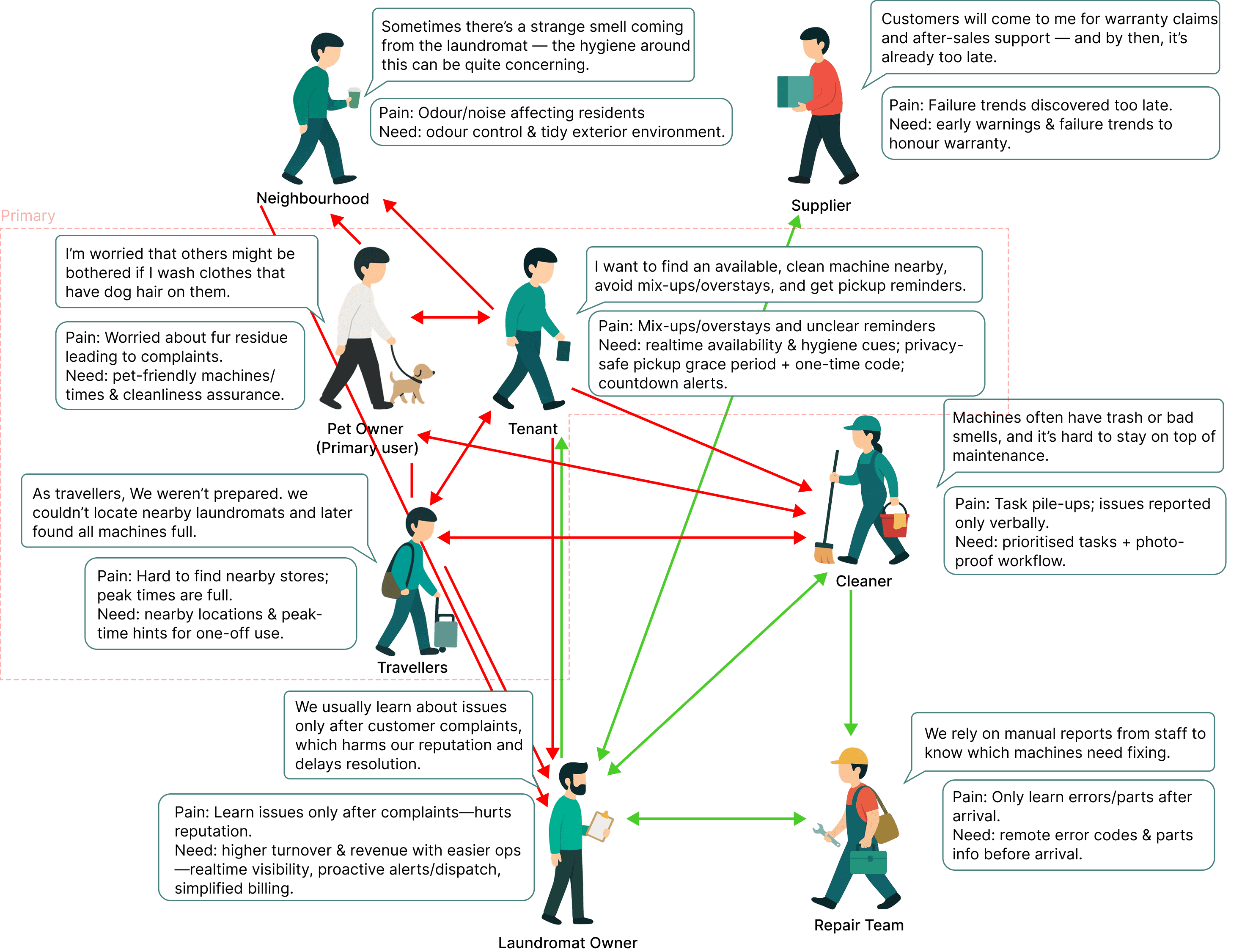
This stakeholder map showing how tenants, travelers, pet owners, cleaners, owners, and maintenance staff operate within the same shared space while holding distinct — and sometimes conflicting — needs, priorities, and responsibilities.
This stakeholder map showing how tenants, travelers, pet owners, cleaners, owners, and maintenance staff operate within the same shared space while holding distinct — and sometimes conflicting — needs, priorities, and responsibilities.
It highlights how limited information visibility, fragmented communication, and reactive maintenance practices can create tension between stakeholders, leading to inefficiencies, friction, and coordination challenges across the system.
It highlights how limited information visibility, fragmented communication, and reactive maintenance practices can create tension between stakeholders, leading to inefficiencies, friction, and coordination challenges across the system.
Paradox
Paradox
Recurring problems in public self-service laundromats are not caused by individual user errors, but emerge from multiple stakeholders pursuing different—and often misaligned—goals within the same shared environment.
Through our research, we identified four recurring paradoxes that directly shaped our design direction
Recurring problems in public self-service laundromats are not caused by individual user errors, but emerge from multiple stakeholders pursuing different—and often misaligned—goals within the same shared environment.
Through our research, we identified four recurring paradoxes that directly shaped our design direction
Paradox 01 — Pickup Security & Delay vs. High-Turnover Operations
In unattended laundromats, users seek to protect their privacy and belongings by locking machines and, at times, delaying laundry pickup.
Operators, however, rely on fast machine turnover to sustain efficient operations.
For users, extra time provides reassurance and security; for operators, extended occupancy reduces efficiency and increases operational costs.
→ Design responses: pickup-protection buffer, optional paid extension, peak-hour time limits
(Dynamic Paid Locking System)
(Derived from the “Dynamic Paid Locking System — Pickup Protection Conflict”)
Paradox 01 — Pickup Security & Delay vs. High-Turnover Operations
In unattended laundromats, users seek to protect their privacy and belongings by locking machines and, at times, delaying laundry pickup.
Operators, however, rely on fast machine turnover to sustain efficient operations.
For users, extra time provides reassurance and security; for operators, extended occupancy reduces efficiency and increases operational costs.
→ Design responses: pickup-protection buffer, optional paid extension, peak-hour time limits
(Dynamic Paid Locking System)
(Derived from the “Dynamic Paid Locking System — Pickup Protection Conflict”)
Paradox 01 — Pickup Security & Delay vs. High-Turnover Operations
In unattended laundromats, users seek to protect their privacy and belongings by locking machines and, at times, delaying laundry pickup.
Operators, however, rely on fast machine turnover to sustain efficient operations.
For users, extra time provides reassurance and security; for operators, extended occupancy reduces efficiency and increases operational costs.
→ Design responses: pickup-protection buffer, optional paid extension, peak-hour time limits
(Dynamic Paid Locking System)
(Derived from the “Dynamic Paid Locking System — Pickup Protection Conflict”)
Persona
Persona

Primary Persona — Eva
Long-term student tenant
Eva is a university student living in a small apartment without an in-unit washing machine.
As a frequent laundromat user, she is highly sensitive to machine availability, hygiene transparency, and pickup security.
Key needs
Check machine availability before leaving
Monitor laundry progress remotely
Extend pickup protection when delayed
Avoid poorly maintained machines
Eva represents the highest-risk user in the system: a high-frequency user with elevated anxiety, who is repeatedly exposed to uncertainty in shared laundry spaces.
Core scenario
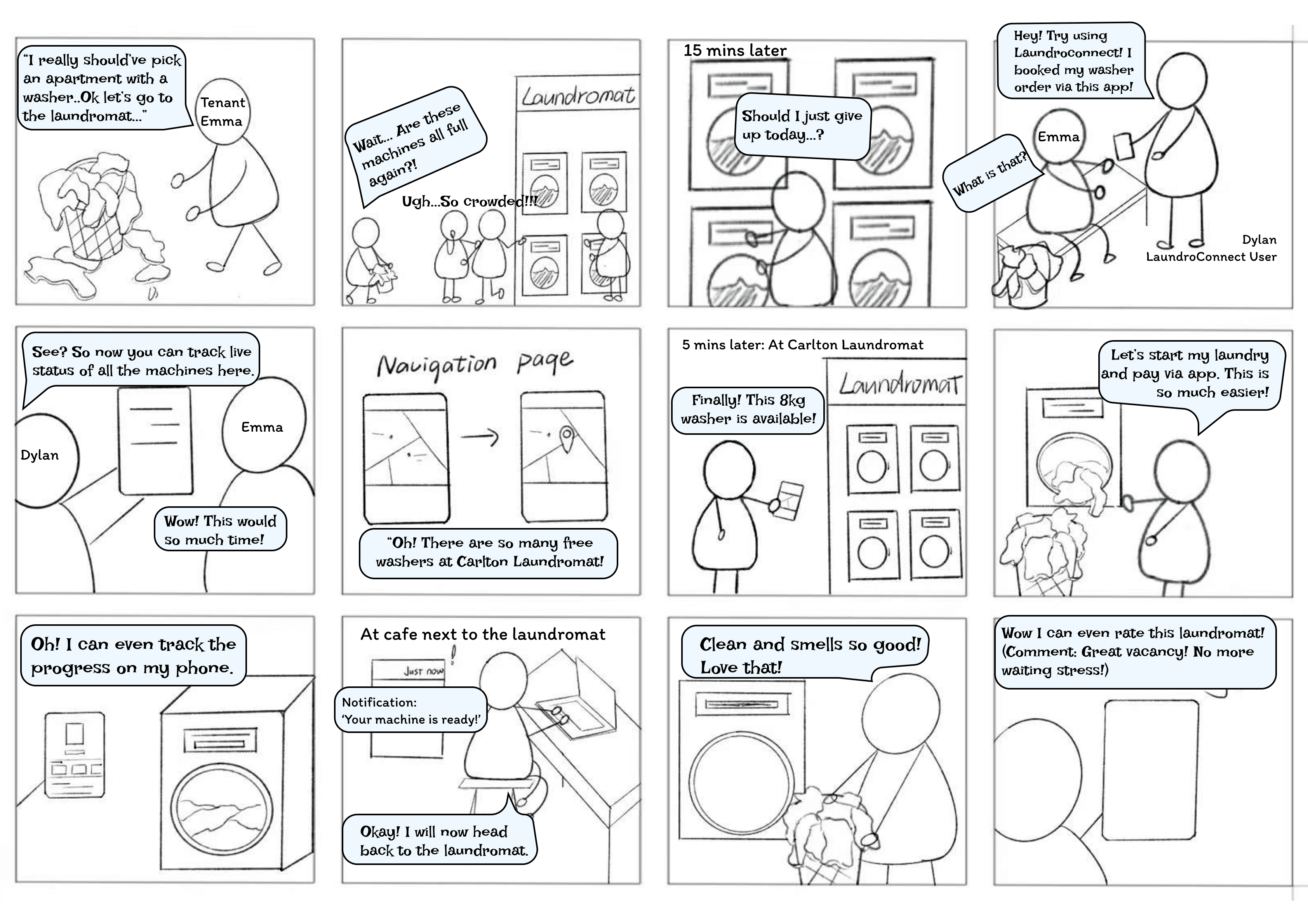
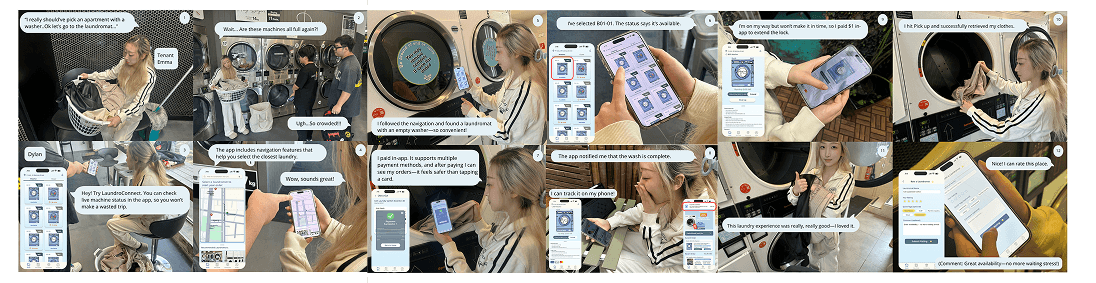
Eva uses LaundroConnect to view real-time machine availability, select a clean washer, track progress remotely, and extend pickup protection when delayed.
This end-to-end flow transforms laundry from an anxious waiting task into a predictable and controllable daily routine.
Primary Persona — Eva
Long-term student tenant
Eva is a university student living in a small apartment without an in-unit washing machine.
As a frequent laundromat user, she is highly sensitive to machine availability, hygiene transparency, and pickup security.
Key needs
Check machine availability before leaving
Monitor laundry progress remotely
Extend pickup protection when delayed
Avoid poorly maintained machines
Eva represents the highest-risk user in the system: a high-frequency user with elevated anxiety, who is repeatedly exposed to uncertainty in shared laundry spaces.
Core scenario
Eva uses LaundroConnect to view real-time machine availability, select a clean washer, track progress remotely, and extend pickup protection when delayed.
This end-to-end flow transforms laundry from an anxious waiting task into a predictable and controllable daily routine.
Ideation Process
Ideation Process
Based on our research, we identified three recurring pain points in the public laundromat experience: lack of visibility of machine availability, unclear hygiene conditions, and the absence of effective remote communication mechanisms. These issues often lead to wasted trips, waiting anxiety, and conflicts between users, and they became the starting point for our ideation process.
During the ideation stage, the team brainstormed a wide range of potential solutions, including an owner-facing management dashboard, pet-only washing zones, online booking systems, and eco-incentive features. However, we soon recognised that some ideas were either too complex to implement within the project scope or did not directly improve everyday user experience. Under constraints of time and technical feasibility, we established three decision criteria: does the idea address a real user pain point, can it be designed and tested within the project timeline, and does it improve visibility and transparency in the laundromat experience.
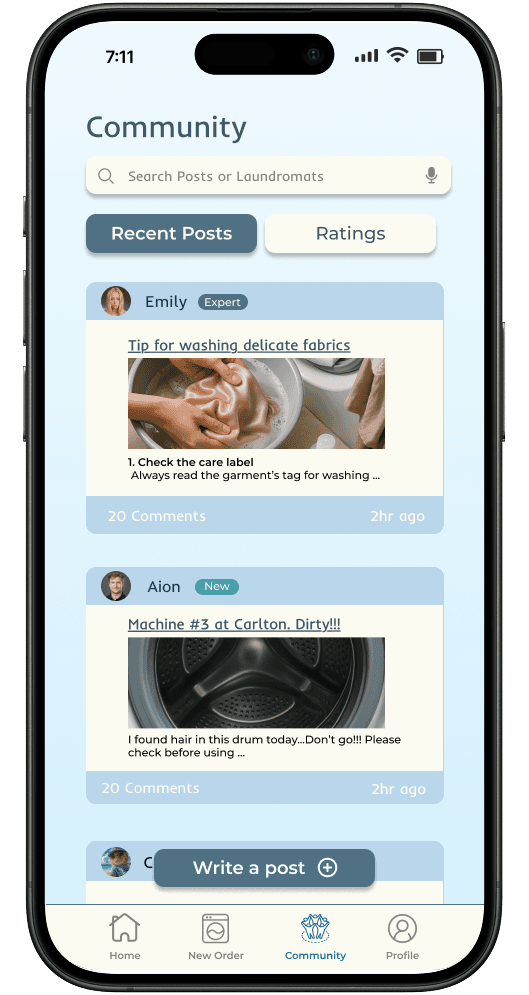
Through this process, we converged on three core design directions: map-based machine availability visualisation, a pickup delay and protection mechanism, and a community-based information and feedback platform. These directions prioritised feasibility and user value, supporting our overall goal of reducing uncertainty, improving users’ sense of safety, and fostering trust in a shared public space.
Based on our research, we identified three recurring pain points in the public laundromat experience: lack of visibility of machine availability, unclear hygiene conditions, and the absence of effective remote communication mechanisms. These issues often lead to wasted trips, waiting anxiety, and conflicts between users, and they became the starting point for our ideation process.
During the ideation stage, the team brainstormed a wide range of potential solutions, including an owner-facing management dashboard, pet-only washing zones, online booking systems, and eco-incentive features. However, we soon recognised that some ideas were either too complex to implement within the project scope or did not directly improve everyday user experience. Under constraints of time and technical feasibility, we established three decision criteria: does the idea address a real user pain point, can it be designed and tested within the project timeline, and does it improve visibility and transparency in the laundromat experience.
Through this process, we converged on three core design directions: map-based machine availability visualisation, a pickup delay and protection mechanism, and a community-based information and feedback platform. These directions prioritised feasibility and user value, supporting our overall goal of reducing uncertainty, improving users’ sense of safety, and fostering trust in a shared public space.
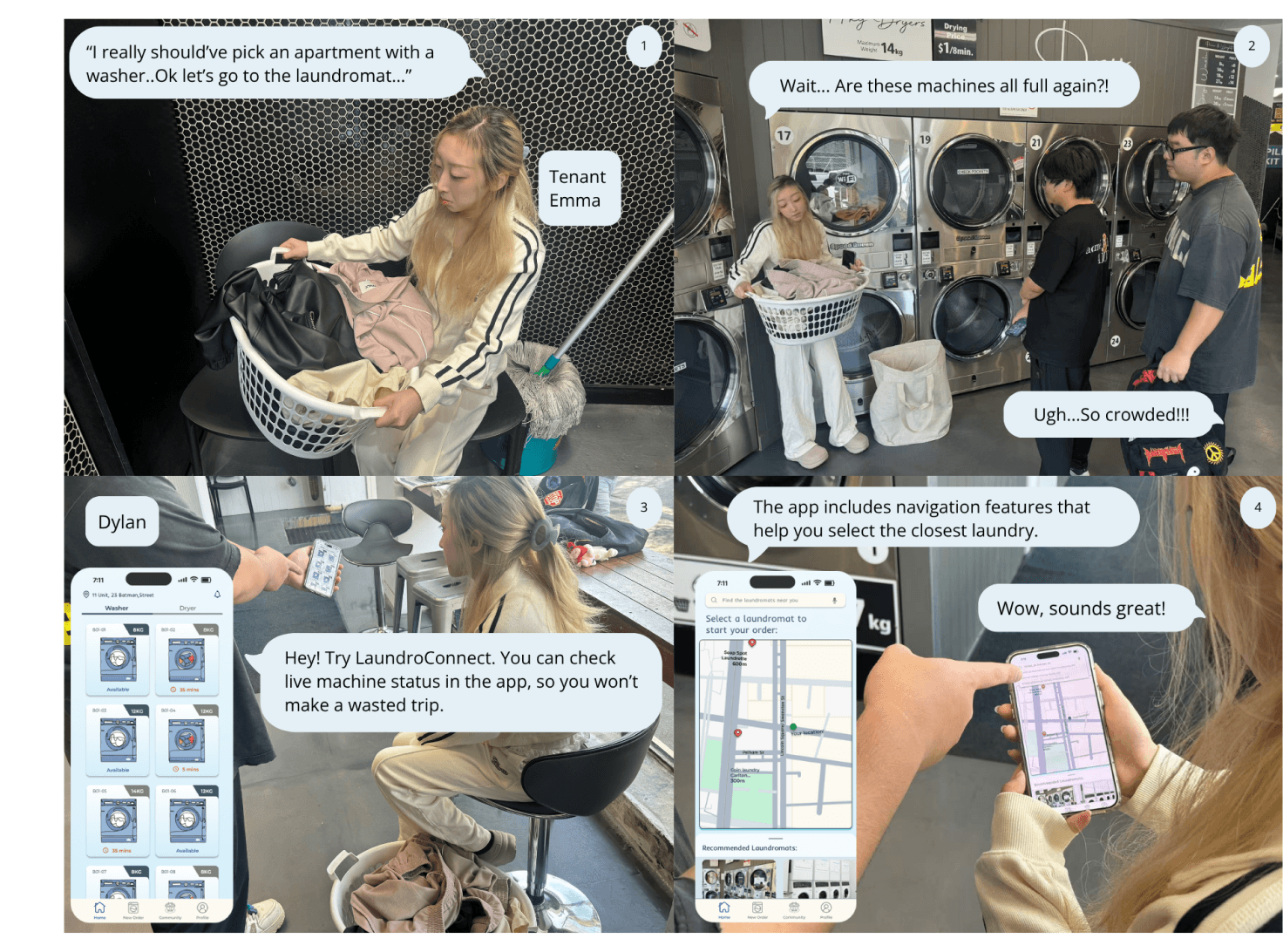
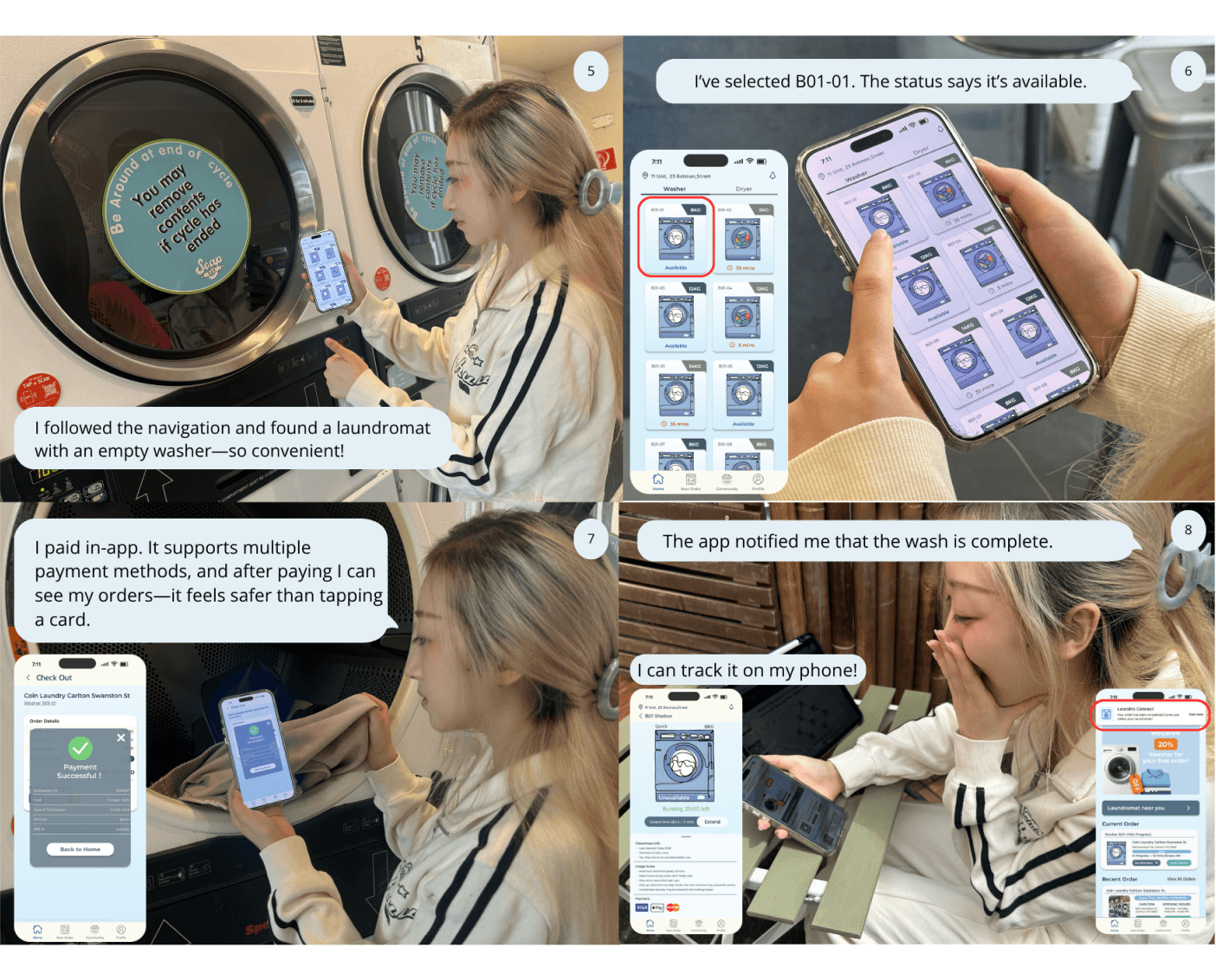
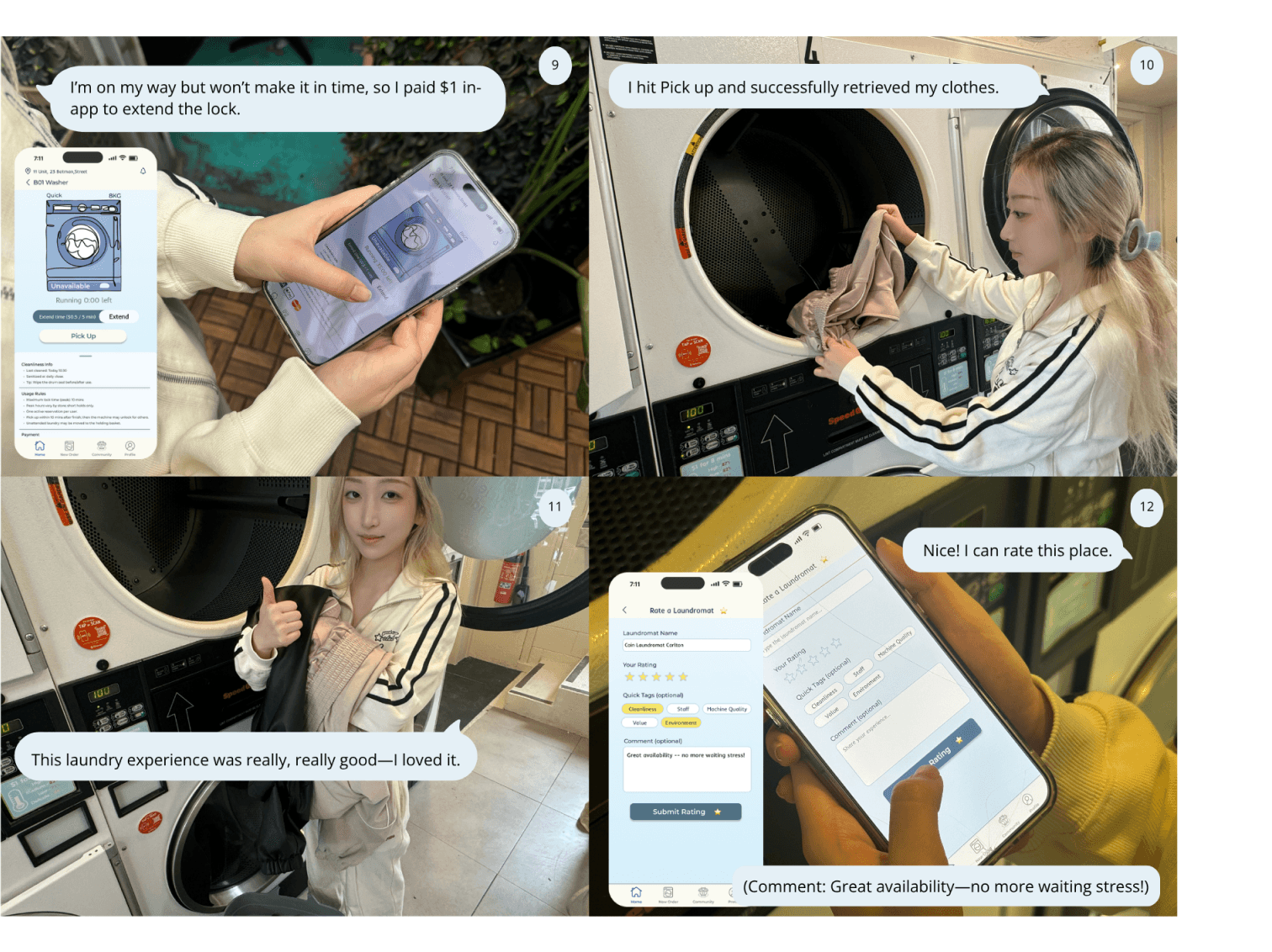
Storyboard
Storyboard
My Concept
My Concept
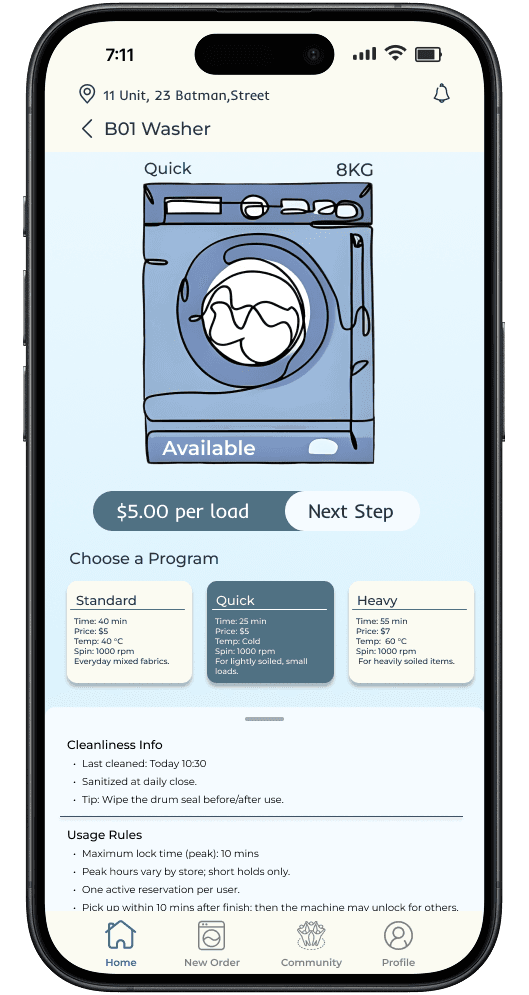
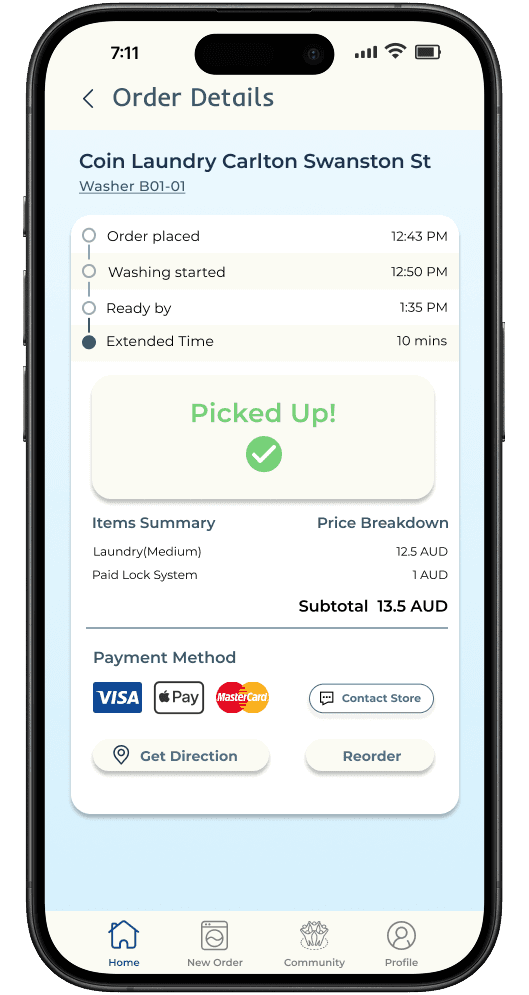
Building on a core paradox identified during research—the tension between users’ need for pickup security and owners’ need for efficient machine turnover—I proposed the Dynamic Paid Locking System as my individual design focus. The system provides a short free pickup buffer after a wash cycle ends and allows users to extend the protection period with a small fee, while imposing time limits during peak hours to prevent long-term machine occupation.
This design reframes what is often perceived as “malicious machine blocking” into a negotiable and system-regulated behaviour. In early prototype interviews, users reported an increased sense of security and generally perceived the mechanism as fair. They also expressed interest in future features such as reservation options and peak-time predictions, which informed directions for further iteration.
Building on a core paradox identified during research—the tension between users’ need for pickup security and owners’ need for efficient machine turnover—I proposed the Dynamic Paid Locking System as my individual design focus. The system provides a short free pickup buffer after a wash cycle ends and allows users to extend the protection period with a small fee, while imposing time limits during peak hours to prevent long-term machine occupation.
This design reframes what is often perceived as “malicious machine blocking” into a negotiable and system-regulated behaviour. In early prototype interviews, users reported an increased sense of security and generally perceived the mechanism as fair. They also expressed interest in future features such as reservation options and peak-time predictions, which informed directions for further iteration.
Main Prototype
Main Prototype
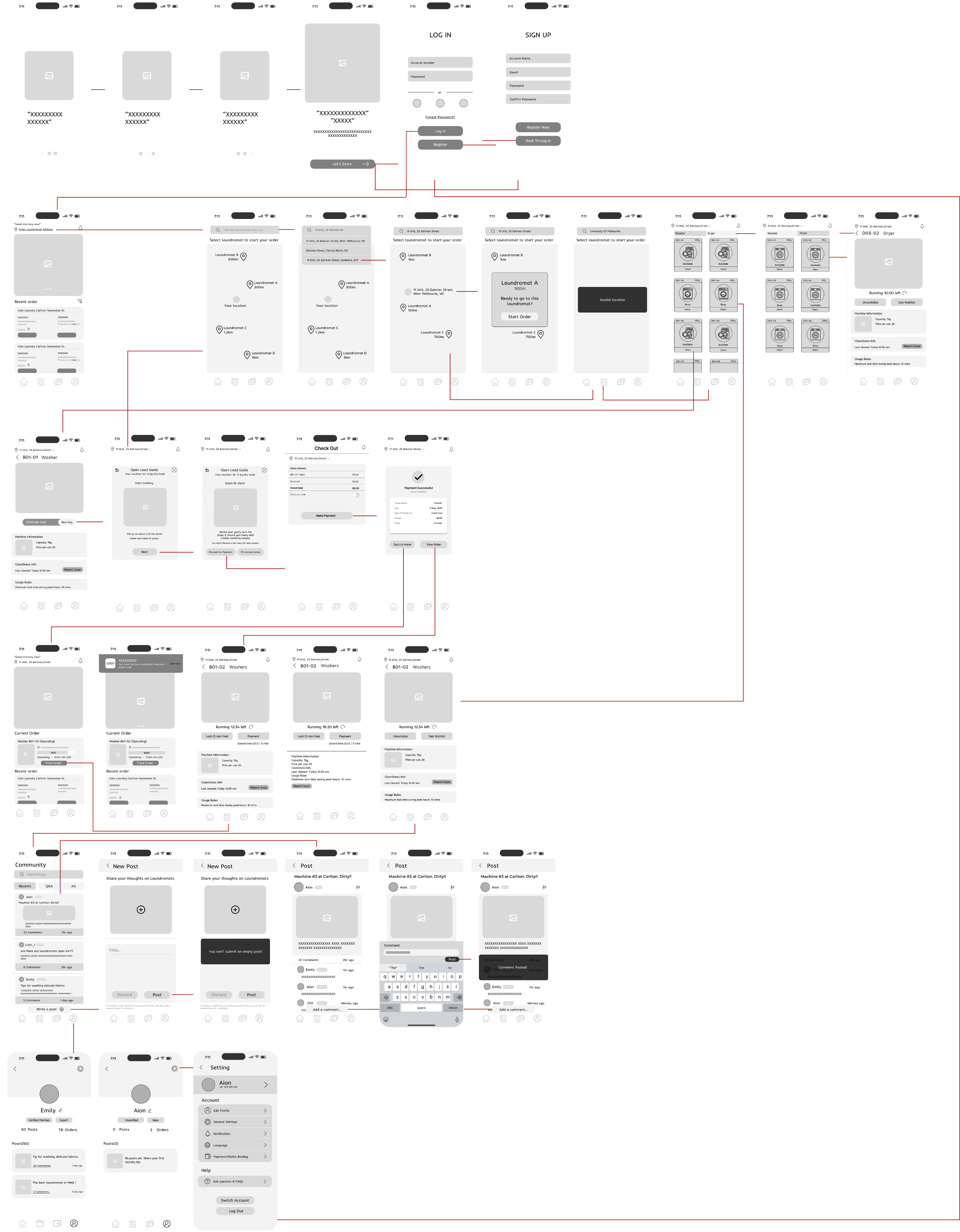
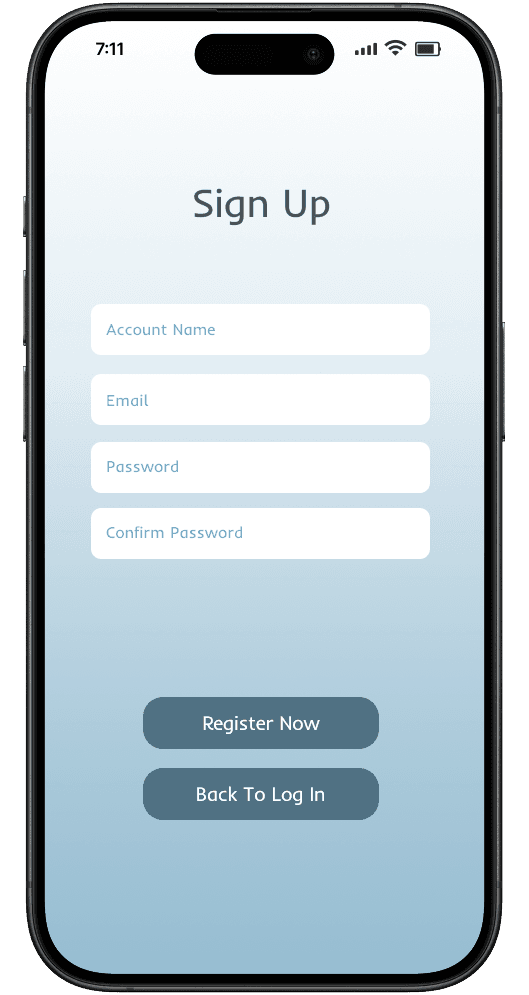
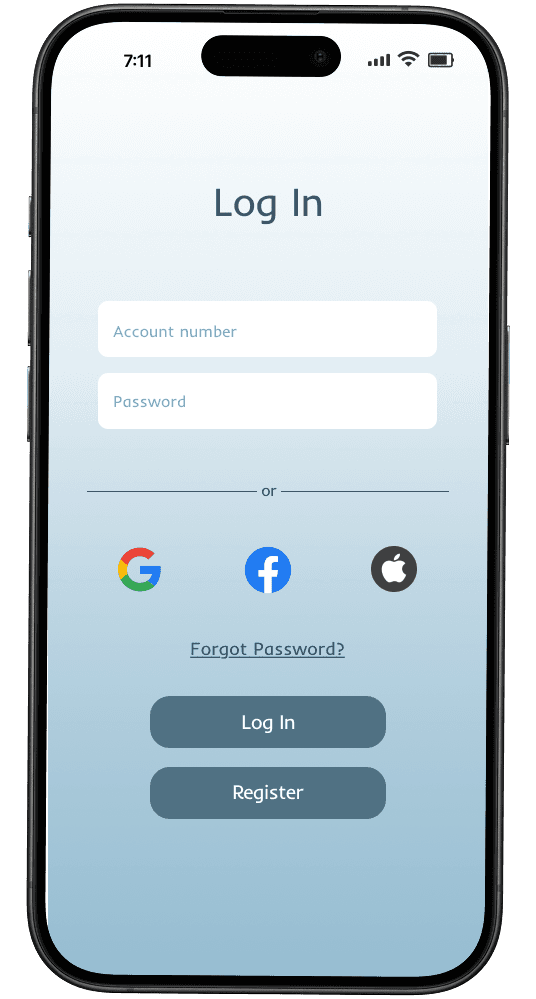
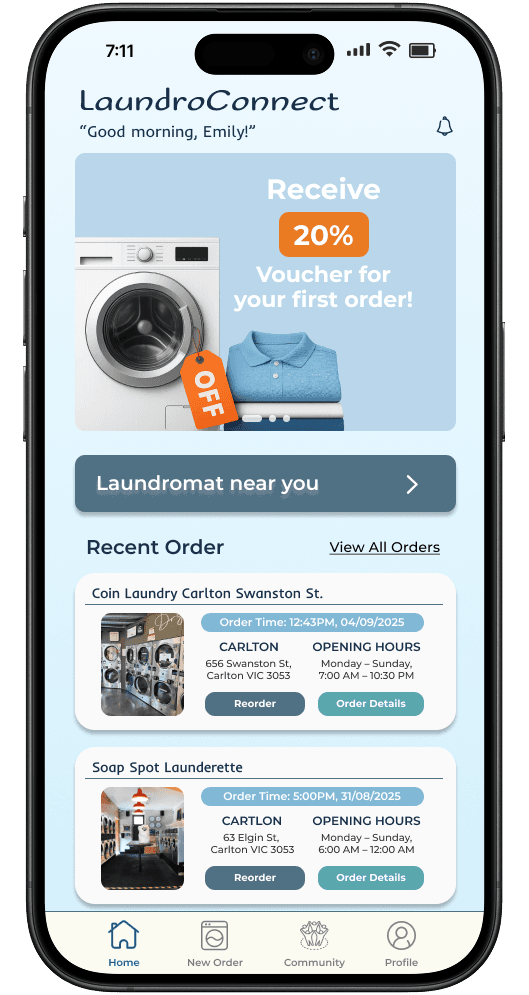
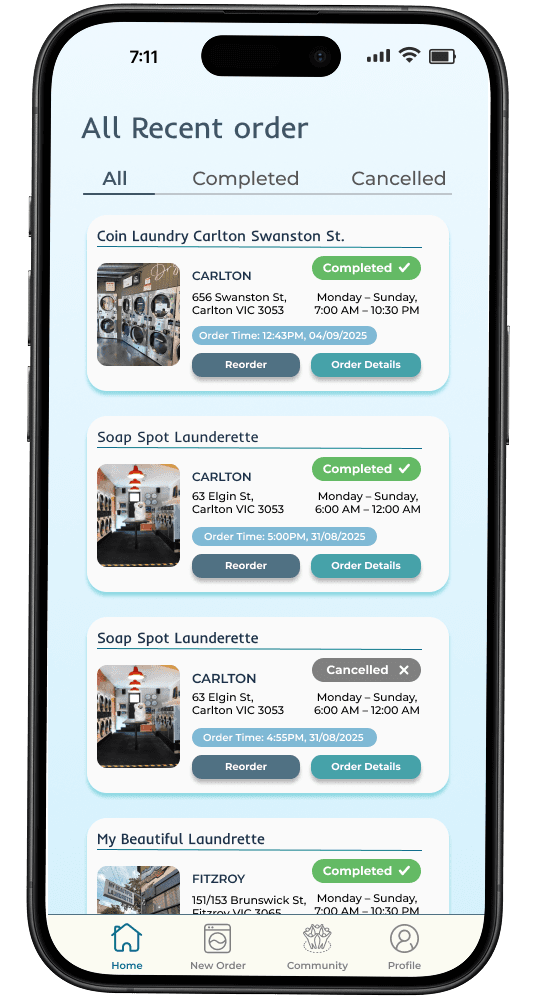
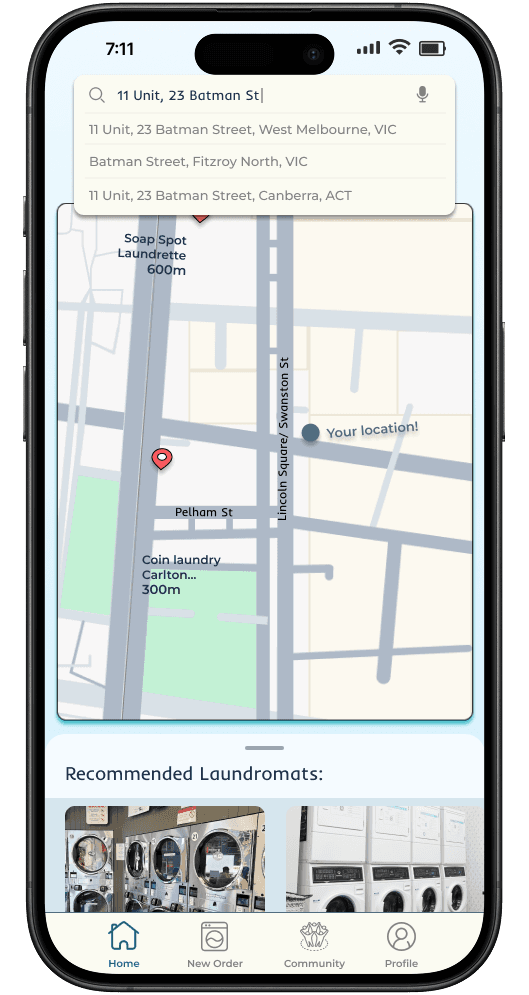
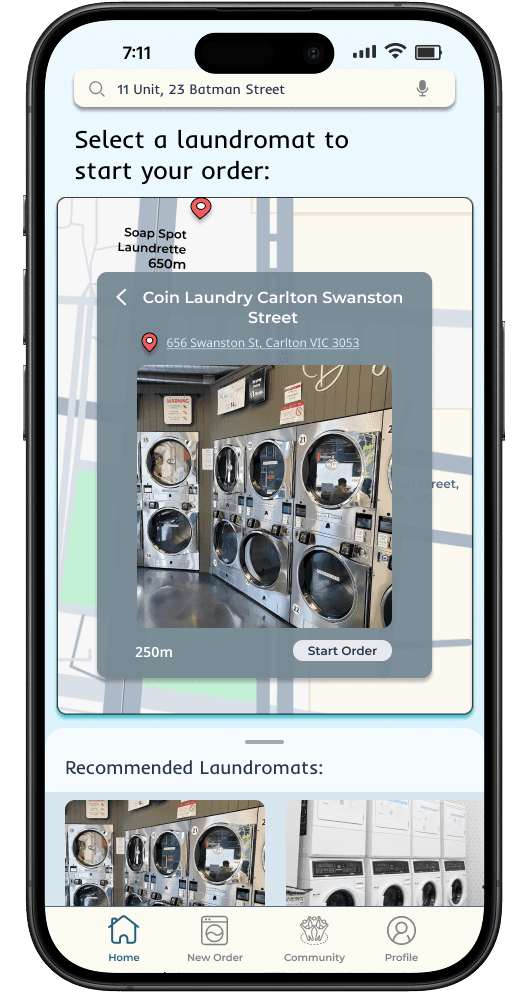
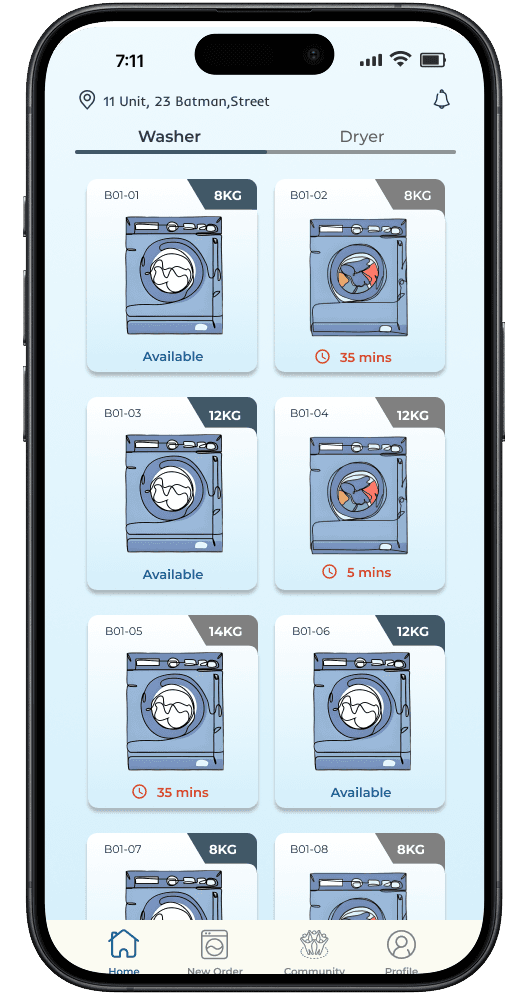
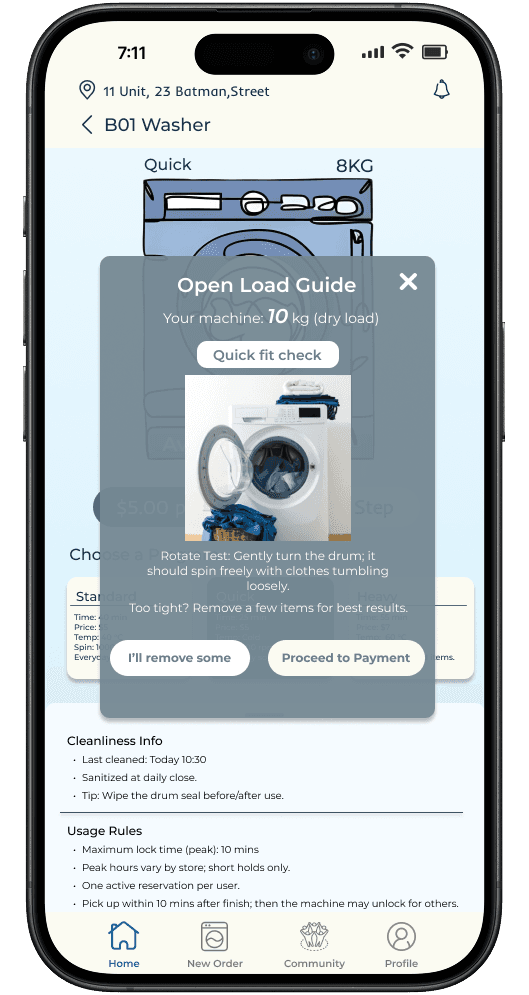
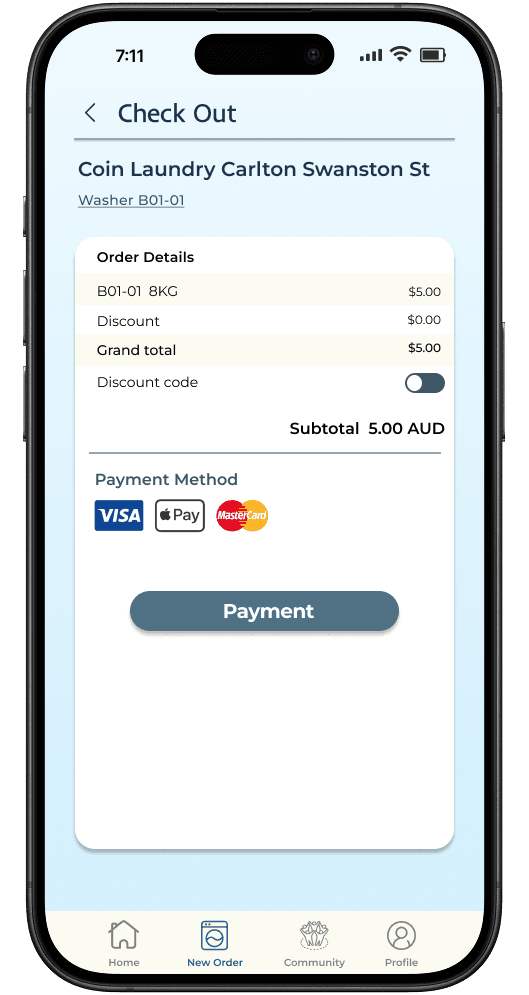
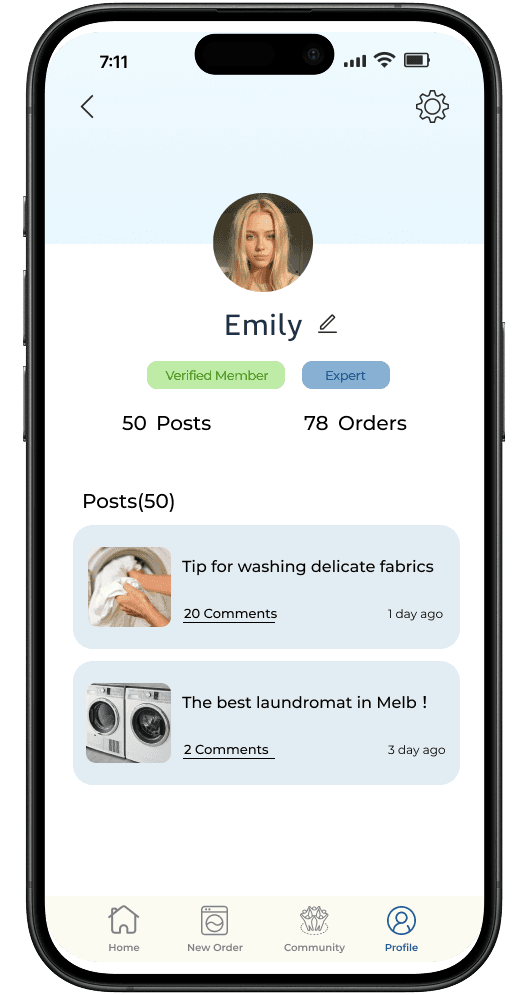
In the final prototype, we integrated these design directions into a coherent end-to-end flow: map browsing → machine selection → order tracking → pickup extension → community feedback. The system helps users quickly understand their current status and next possible actions, transforming laundry from a passive waiting task into a more predictable and controllable everyday routine.
Design rationale: prioritising visibility, predictable feedback, and low cognitive load across all key flows.
In the final prototype, we integrated these design directions into a coherent end-to-end flow: map browsing → machine selection → order tracking → pickup extension → community feedback. The system helps users quickly understand their current status and next possible actions, transforming laundry from a passive waiting task into a more predictable and controllable everyday routine.
Design rationale: prioritising visibility, predictable feedback, and low cognitive load across all key flows.
End-to-End Interaction Flow (Low-Fidelity Prototype)
Connected wireframes illustrating core user journeys across the system
End-to-End Interaction Flow (Low-Fidelity Prototype)
Connected wireframes illustrating core user journeys across the system
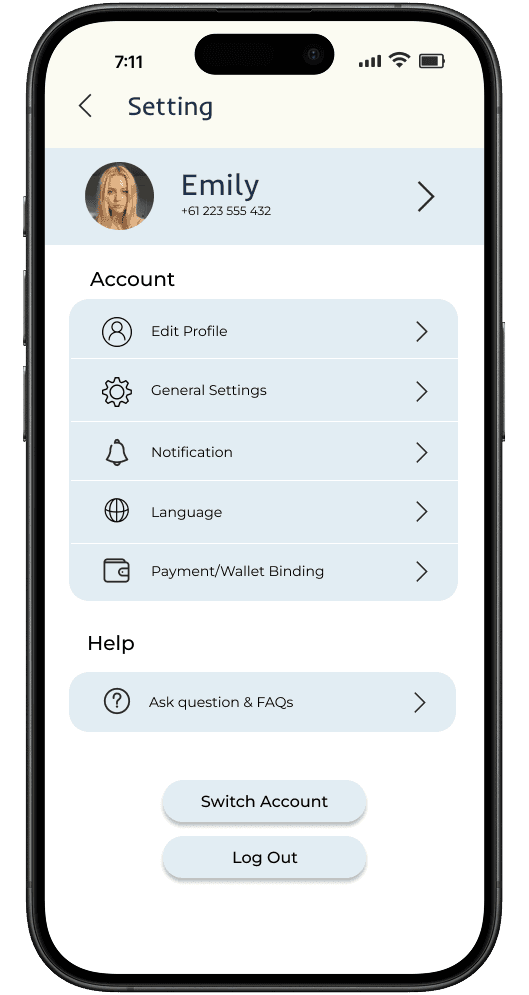
Detail Prototype
Detail Prototype
User Flow
User Flow
Evaluation & Validation
Evaluation & Validation
We validated the prototype through quick A/B testing and user walkthroughs.
Results confirmed that the illustrated interface improved clarity and approachability, while task testing showed that real-time tracking and pickup extension reduced user anxiety.
Feedback also highlighted the need for clearer rules around pickup extension fairness, which informed later refinements.
We validated the prototype through quick A/B testing and user walkthroughs.
Results confirmed that the illustrated interface improved clarity and approachability, while task testing showed that real-time tracking and pickup extension reduced user anxiety.
Feedback also highlighted the need for clearer rules around pickup extension fairness, which informed later refinements.